
Bridging Academia and Industry for the Future of Intelligent Banking
Zahra Fayzii from the Vice-Presidency for Research and Technology News Desk of the University of Tehran:
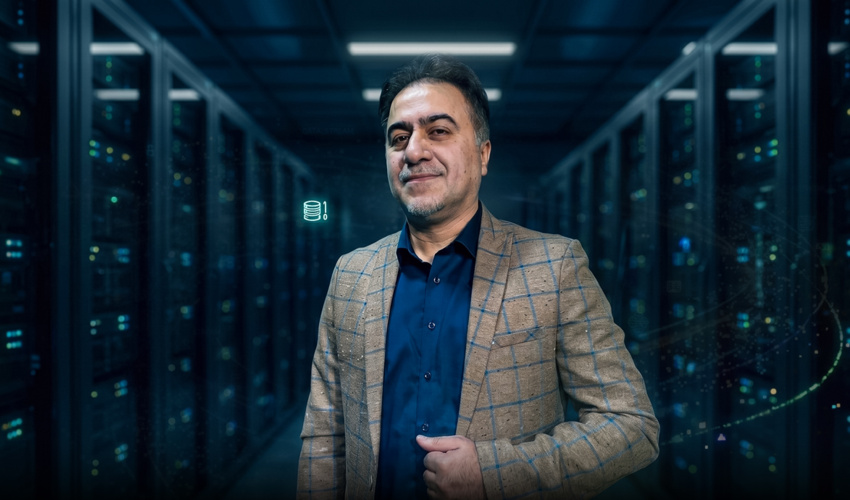
Dr. Heshaam Faili, a prominent researcher in artificial intelligence and cognitive technologies at the University of Tehran, has outlined the achievements of the “Artificial Intelligence and Cognitive Sciences Research Institute of Bank Mellat and the University of Tehran,” an initiative established nearly two years ago to strengthen collaboration between academia and the banking industry.
The institute was founded through a partnership between Bank Mellat and the University of Tehran with the goal of creating a sustainable bridge between scientific research and the practical needs of the country’s financial sector.
According to Dr. Fili, the institute was designed around the idea that universities should move beyond theoretical research and become active contributors to solving real-world challenges. One of the institute’s most important achievements has been the formation of interdisciplinary research and industrial teams capable of developing practical AI-driven solutions for banking and finance. Some of these teams have already evolved into independent knowledge-based companies, including “Adan AI,” a startup established as an outcome of the institute’s activities and currently based in the Science and Technology Park of the University of Tehran.
A major focus of the institute has been the development of artificial intelligence infrastructure for Bank Mellat. Dr. Fili highlighted the creation of intelligent banking assistants integrated into the bank’s mobile banking platform as one of the institute’s key projects. These AI-powered systems aim to provide faster, more personalized, and more efficient banking services for customers. In parallel, additional projects are underway to design AI assistants for bank employees, analytical systems, and decision-support platforms that could significantly advance digital transformation within Iran’s banking network.
Dr. Fili also emphasized the growing importance of “AI strategy” within organizations. He explained that:
While information technology strategies were once considered sufficient for institutional development, organizations today require comprehensive roadmaps specifically focused on artificial intelligence. To address this need, a specialized team at the institute is currently developing Bank Mellat’s AI strategy and long-term implementation roadmap, with the aim of guiding the bank’s future transformation through data-driven and intelligent technologies.
Another central mission of the institute is education and human resource development. Dr. Fili noted that several professional AI training programs have already been organized for banking experts and managers, while a broader annual educational framework is being prepared. These initiatives are intended to improve AI literacy and prepare specialized professionals capable of integrating emerging technologies into the country’s financial ecosystem.
He believes the institute’s experience can serve as a national model for cooperation between universities and industries in other sectors as well. In his view, universities should not function solely as centers for academic publication, but also as strategic partners capable of addressing societal and industrial challenges through innovation and research.
Dr. Fili concluded by expressing appreciation to Bank Mellat for supporting this collaborative initiative and for recognizing the University of Tehran as a trusted scientific and research partner. He stressed that such collaborations reflect a forward-looking approach to technological development in Iran and could pave the way for a new generation of intelligent financial services and innovation-driven institutions.
Your Comment :